

No matter how passionate you are about your business and customers, making money is always going to be high on your list of priorities. For some, it’ll be right at the top.

If costs rise, it’s inevitable that your own prices will too. In this article we explain how to spot the signs that tell you it’s time to start charging more, and how to calculate your fee increase.
Mastering the balancing act

The process of actually making the pricing change tends to be fairly straighforward – unless you have a massive ecommerce shop with 90,000 items, in which case you have our love and sympathy.

The difficult bit is working out how much your fees need to go up by.

Increasing prices isn’t always quite as simple as it sounds, especially when you’ve got a base of loyal customers who are accustomed to what you currently charge for your product or service. As a business owner, you’ve got to do what’s necessary, but you also want to avoid putting anyone off. It’s a tricky balancing act to master.

Compare your sales and expenses to see your profit margins

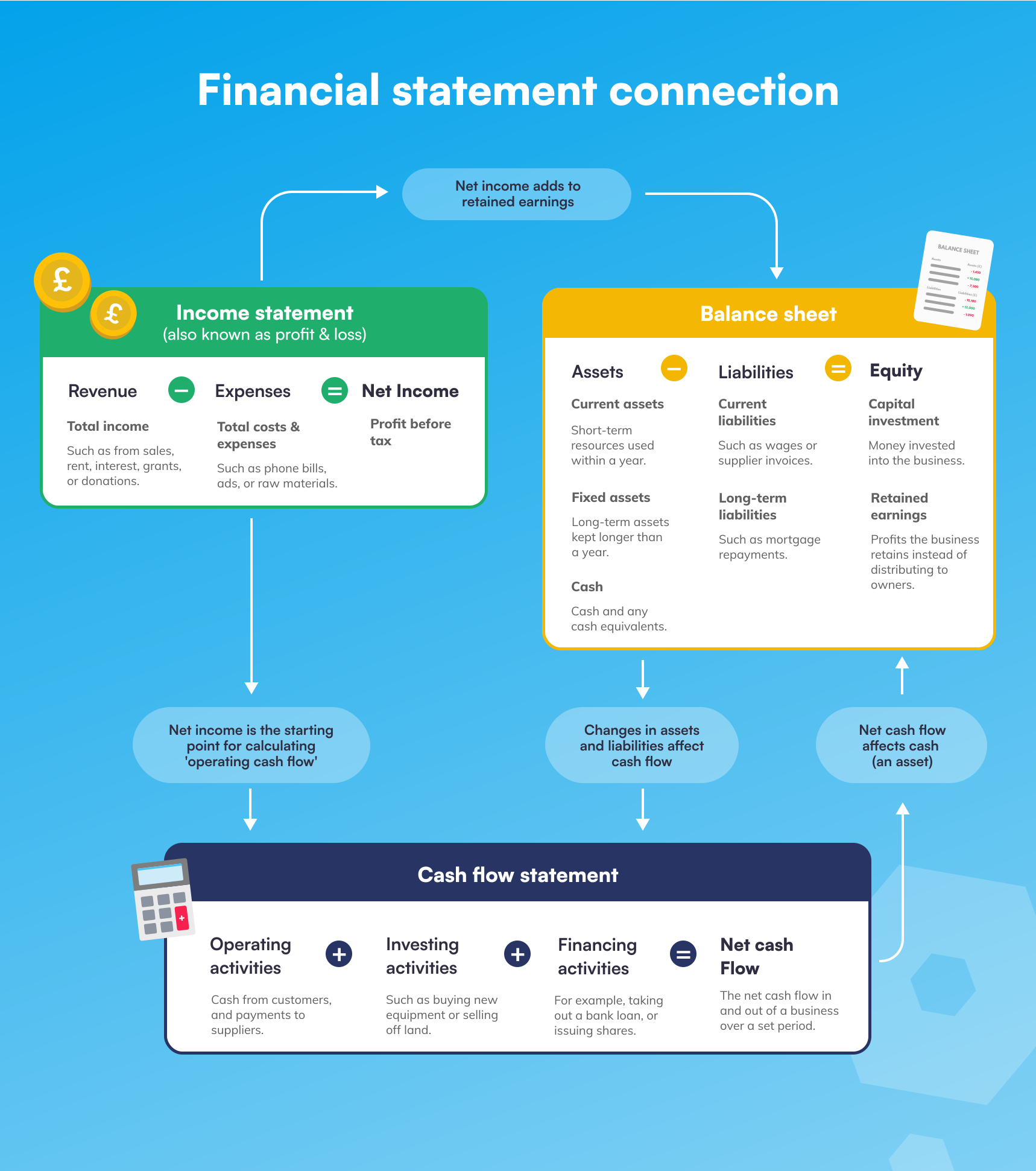
One of the easiest places to start when considering a price increase is your business’s financial reporting. Keeping a close eye on your business expenses and how much you are selling will help you identify whether you are charging too much or little for your products or services. The diagram below shows the relationship between income, expenses, and your financial health.

It’s all too easy for expenses to rack up, from fuel to phone bills. Tracking your expenses regularly can really pay off, as you’ll be able to easily spot areas that need attention. For example, if your phone contract is up for renewal you might be able to negotiate a better price, or find one elsewhere. Yes it probably does mean going on hold and trying to keep your nerve when you finally speak to someone.

Saving on expenses means lower costs, which increases profits without the need to increase prices.

The bit where we toot our own horn

Pandle’s reporting tools make it very easy to keep track of how your business is performing financially. You can even export data into a spreadsheet to analyse performance in more detail.

How much is your time worth?

It’s all too common for business owners to overlook the value of their own time. We’re here to remind you. The time it takes you to provide a service or create a product is a reflection of your knowledge and experience. This should, in turn, be reflected in your prices.

For example, it takes you 15 minutes to turn around a request, but that’s because you have 15 years’ experience in your industry. Don’t underestimate the value of your time and experience. Or we’ll be terribly disappointed in you.

Benchmarking prices against competitors

Doing your research can pay off. Most businesses will know who their closest competitors are, so keep an eye on them. Reviewing what they offer and their pricing structure will help you compete. Even seemingly unrelated details, like the fact they closed their offices to work remotely, could actually represent a cost saving they’re now passing on to customers.

Yearly reviews

Most businesses review their prices on a yearly basis, reflecting the cost of living and rising costs of materials. It’s a good idea to build time into your calendar every year to plan ahead and consider reviewing your prices.

Pandle’s Cash Flow Forecasting feature helps businesses to set future cash flow goals and view trends in cash flow, helping you to make even better decisions. Just thought we’d mention it.

When is the right time to increase prices?

The starting point for almost all business decisions is in your financial reporting, so you can identify what the issue is, and how best to fix it.

For instance, is it because sales are low, costs are high, or the price is wrong? Checking the figures will help you understand what’s what.

Getting the pricing right can be particularly challenging for fledgling ventures, so you might find you need to reassess and adjust as things change.

When your own outgoings increase

As a business owner, you’re almost always someone else’s customer, as well as being a supplier. You’ll often find yourself on the other side of the transaction, buying goods and services to use in your business which means you’ll inevitably be subject to suppliers increasing their prices.

Inflation or market demand dictates the materials or services you use will gradually increase in cost over time, making it necessary to raise your own prices to reflect your extra spending. Monitor your expenses and overheads to keep track of this, and consider how long-term any price-hikes are likely to be.

You might also want to monitor your expenses so that you can recharge them to clients where appropriate. For example, recording your business mileage to a client meeting so you can bill them for the cost.

When you register for VAT

Businesses must register for VAT once their taxable turnover in a 12-month period reaches the £90,000 threshold, or you might find it useful to voluntarily register early. Once you register, you’ll need to charge VAT on all taxable sales.

This leaves you with options in terms of pricing:

  • Keep your prices the same, absorbing the additional VAT amount. What you charge to the customer won’t change, but you’ll make less profit on each sale in order to pay the VAT bill.
  • Add VAT to your existing prices. It’s more for your customer to pay, and if they’re not VAT registered, they won’t be able to claim the VAT back, but you’ll keep your profit margins.
  • A combination of the two!

When you take on new employees

Taking on staff normally means you’re making enough sales to need the extra help, but employing new staff also means you’re going to have to pay their salary, make employer’s National Insurance and pension contributions, plan for any training costs, buy them a uniform or desk… There are costs involved.

The flipside of this is that new recruits in your workforce also bring new skills, talent, experience, and a fresh perspective. You’ll be able to expand your offering and develop your product or service, so you might decide to invest in the talent in order to grow, rather than the other way around.

Other signs it might be time to increase your prices

  • Customer reviews are consistently surprised at how affordable or cheap your prices are – especially in comparison to your competitors
  • It’s been several years since you reassessed your pricing
  • You run a trial period of new increased prices with no repercussions on your sales
  • Your accountant has suggested it would be a positive move for your business

How often should I increase my prices?

Although there’s no set timeline for increasing your fees, it’s clear to see why doing so too frequently would put off customers. On the other hand, not reassessing your prices often enough could mean missing out on opportunities to boost your profit and stand out in the market.

There’s no right or wrong answer when it comes to the frequency of pricing updates, and it’s largely dependent on circumstances. Analysing your financial information, and conducting regular market research and competitor analysis will help your decision-making.

Enlisting the expertise of your accountant will also give you access to valuable professional insight – don’t forget, they see behind the scenes of a lot of businesses!

How to keep customers happy in the process

Customers are never going to celebrate paying more – that’s just the reality of the situation. What you can do is take measures to reduce the risk of any backlash, and remain considerate to your customers when implementing additional costs.

Timing is key

Choose your timing wisely, such as seasonal changes for popular items.

Introduce a new product or service at the same time

Adding value to what you offer customers shows customers they’re getting something back for the additional money you’re asking them to spend.

Consider only raising prices for new customers

If you’re particularly concerned about how your customers are going to react to increased prices, you might consider freezing costs for existing customers and applying new prices only to new customers.

Allow some wiggle room for discounts and promotion

Build in some allowance for discounts when thinking about your new prices to appease customers who might not be best pleased about the additional costs.

Create additional packages at lower costs

If you offer services as a package, consider offering new combinations so customers pay for what they actually use.

Consider targeting a more affluent demographic

As well as nurturing your existing customer base, think about appealing to a more affluent demographic too. These are the customers who will be more willing to pay higher costs. You could do this through paid promotion such as social media and paid search ads.

Take a forward-thinking approach

Don’t just consider your past and present status when deciphering your new pricing structure, think about the future too. What you don’t want to do is increase your prices with a short-term strategy and then come to realise you need to do the whole thing again not long after.

Learn more about using Pandle to make business accounting easier. Create an account today and decide what to do with all the extra time you get back.

Elizabeth Hughes

A content writer specialising in business, finance, software, and beyond. I'm a wordsmith with a penchant for puns and making complex subjects accessible.

Subscribe
Notify of
guest
0 Comments
Oldest
Newest Most Voted

Get started with Pandle

Create your account today, and decide what to do with all the extra time you get back. We hear Pilates is popular.

Live chat support

No card details required

Making Tax Digital compliant

Live chat support

No card details required

Making Tax Digital compliant