
Recording and Claiming Expenses for Running a Business from Home

By Rachael Anderson

15 September 2026

Expenses

8 mins

If you’re self-employed with your own home office and you’re not claiming the expenses you’re entitled to, what are you doing?! This guide will tell you all you need to know about claiming working from home expenses, what you can claim for, and how to keep proper records (because ‘trust me bro’ isn’t enough evidence if HMRC decide to trigger an investigation).

What expenses can I claim working from home?

It likely costs you money to work from home – unless you do it with the lights off using just your mind (in which case, fair play).

These business costs add up, but you may be able to claim a proportion of them against your tax bill. You can claim for things like:

  • Utility bills, mortgage payments, and council tax
  • Rent
  • The cost of heating and lighting your work area
  • Repairs (if they’re necessary for your business to operate)
  • Wi-Fi
  • Phone bills
  • Office equipment (like computers, laptops, work phones etc)

Will I pay business rates if I run a business from home?

It depends. Business rates are applied to commercial properties like offices or shops, so you won’t usually need to pay them on your home (that’s what Council Tax is for). That said, tax rules always have exceptions.

A property with dual usage (such as someone who lives above the shop) might incur business rates. They can also apply if your clients visit your property to buy goods or services, or if you have employees working on site. It’s best to check with the local council.

If you do end up paying them, you can claim business rates as an expense.

How do I calculate my work from home expenses?

There are different methods you can use to calculate the cost of running your business from home, including:

  • Claiming simplified expenses using HMRC’s flat rate
  • Working out the actual costs that relate to your business
  • Renting out your home office to your limited company

It’s entirely up to you what method you choose – you just need to ensure you’re eligible for that method first. Otherwise, you’ll be unable to claim anything. Before you make your decision, let’s discuss each option in more detail.

Claiming working from home costs using simplified expenses

If you use the flat-rate method it means you’ll be able to offset some of your costs without having to calculate precisely how much it costs to operate your business from home.

The amount you can claim depends on how many hours you work from home – although it must be a minimum of 25 hours per month.

Hours worked at home per month

25 - 50

51 - 100

101 or more

Amount HMRC allow you to claim

£10 per month

£18 per month

£26 per month

Who can use the simplified flat rates for home-working costs?

Whilst this may seem like the perfect option for those of you with a life and a fear of calculators, you could end up falling short if your business’s bills exceed what you’re entitled to. We hate to make things more complicated, but it’s well worth taking the time to work out your actual costs, and then using whichever method gives you more.

It’s also important to note while sole traders and partnerships can use simplified expenses – limited companies cannot.

But if you are a company director, you can use the flat rates to work out how much the company (as a separate legal entity) can reimburse you for using part of your home as a workspace. Then your limited company can claim said reimbursement as an expense. Seems sneaky but it’s legit, we promise.

What if I work inconsistent hours?

Every business owner knows how much things can change from one minute to the next. But fret not – with simplified expenses, you don’t have to claim the same amount each month.

For example

You work from home:

  • 52 hours per month for 10 months: (£18 x 10 = £180)
  • 25 hours per month for 2 months: (£10 x 2 = £20).

    You can claim a total of £200 for that tax year against your household bills.

Working out the actual household costs related to your business

Calculating the actual cost of working from home could be better for you if:

  • The flat rate doesn’t cover your expenses
  • You work fewer than 25 hours per week from home, so you don’t qualify for flat rate expenses
  • You run your business as a limited company, so it’s not eligible for simplified expenses

The types of expenses you could claim for might include things like insurance, cleaning, heating, and light. We’ll go over a step-by-step guide to working out your actual running costs for working from home.

Step 1: Count all the rooms in your home

So, any ‘normal living space’ will count as a room according to HMRC – excluding hallways and bathrooms even if you spend a lot of time in there hiding from your kids.

If you run a garden office for example, billed separately from the rest of your home, it’ll be classed as one single room in its own right. If it’s included in the bills, it’ll be an additional room to add to the total.

01

Step 2: Record the rooms you work in and how long you work in them for

You need to figure out the percentage by looking at how many hours you spend in a room overall.

For instance, let’s say you’re in your living room for 10 hours a day. You spend 9 of those hours binge watching Friends, and 1 hour actually working (no judgement here).

That means 10% of your living room time counts as work use.

Step 3: Divide each bill you have by the number of rooms

The easiest way to calculate these costs is by identifying your bills and dividing them by each room you have.

So, let’s say your electricity bill is £600 per year and you have 5 rooms. 600 ÷ 5 = £120. That means the cost per room is £120.

Step 4: Apply the percentage of work use to the relevant rooms

Let’s say you use your living room to work from home, and your electricity bill divided by all 5 rooms is £120. We’ve already worked out you spend 10% of your time working in your living room. £120 x 10% = £12.

If you have a working office too, and you work in there 80% of the time, it’d be: £120 x 80% = £96.

Add those two amounts together, and you’re entitled to claim tax relief on £108 of your electric bill.

Step 5: Enter the total into your accounts

Apply the method throughout to your eligible bills and enter the total usage into your accounts. So, in this instance, for electric the total business usage of £108 is recorded.

Disclaimer for anyone with a dedicated office: It may be worth using that room for something else too – to avoid paying Capital Gains Tax when you sell your home.

Renting your home out to your limited company

If you’re running a limited company then you’ve probably clocked onto the fact it’s much more straightforward for sole traders and partnerships to claim working from home expenses because they can claim fixed costs.

It isn’t all doom and gloom though – you can in fact charge your limited company ‘rent’. Your company will then be able to claim this cost as an expense (and you’ll get reimbursed for your business costs).

But there are some considerations so finish reading this first please.

You’ll need a rental agreement

If you’re running a limited company you can’t claim for any ‘fixed costs’ unless you have a rental agreement between your home office and your company.

Fixed costs include things like mortgage payments, home insurance, repairs, rent, and Council Tax. HMRC say you’d pay these costs whether you worked at home or not, so because your limited company is a separate legal entity to you, you’ll need an agreement between the two.

To create a rental agreement you’ll need to make sure you have a separate space dedicated to your business, charge rent at the commercial rate, and sign it on behalf of both parties.

Our top tip

Schedule an annual review to reassess the amount of rent you’re charging your limited company.

Even if those agreements or meetings are technically just you talking to yourself, they still matter because HMRC treats you and your company as two legally separate entities.

Think of it like those imaginary shower arguments you always win. It may feel one-sided, but it still counts.

That rental payment counts as personal income

The other important point to note is that the rent you earn will need to be declared as personal income.

It might also mean that part of your home could be subject to Capital Gains Tax if you decide to sell it, so talk to an accountant to be sure this is the right way to go.

Keeping records of your expenses

It’s super important you keep records of all your expenses, including those which relate to working from home.

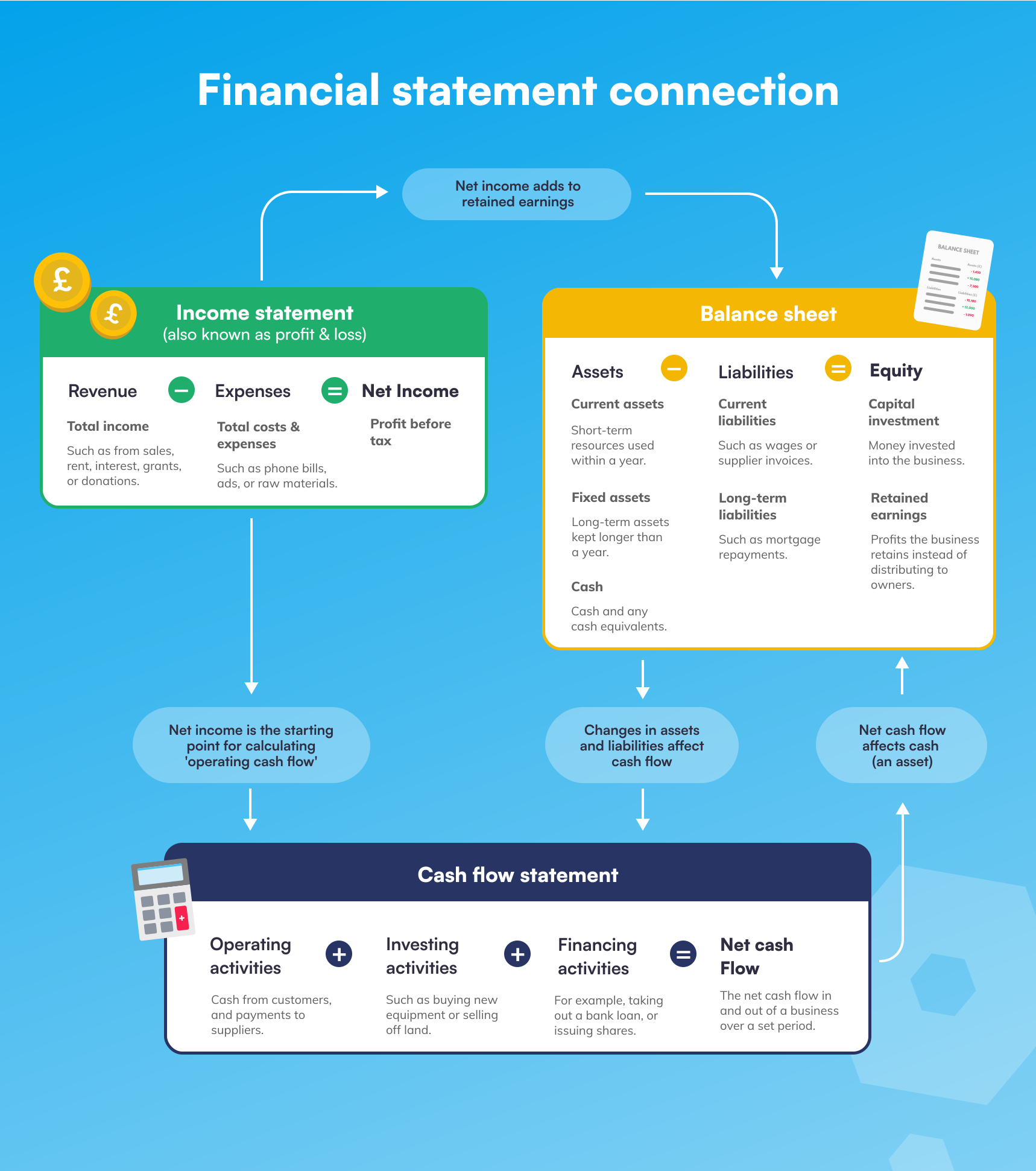
The diagram below shows how recording your expenses correctly affects other areas of your business.

Whilst you don’t necessarily need to send your receipts to HMRC, they could ask to check your records at any time. Using online bookkeeping software, like Pandle, can help you store it all safely, so if HMRC come knocking – you don’t need to run for the hills. Or hide in your washing basket.

Learn more about using Pandle to make business accounting easier. Create an account today and decide what to do with all the extra time you get back.

Rachael Anderson

A creative content writer specialising across business, finance and software topics. I have a love for all things writing, and creating engaging, easy to understand content that helps everyday people!

Subscribe
Notify of
guest
0 Comments
Oldest
Newest Most Voted

Get started with Pandle

Create your account today, and decide what to do with all the extra time you get back. We hear Pilates is popular.

Live chat support

No card details required

Making Tax Digital compliant

Live chat support

No card details required

Making Tax Digital compliant